Hiking Boots vs Tactical Boots: Choosing the Right Footwear for Your Adventures
The footwear you choose can greatly impact how much fun you have on any outdoor adventure. Tactical and hiking boots have different uses and are best suited for various activities. Long-distance hikers find hiking boots suitable since they are often made to offer assistance and safeguarding on routes and uneven terrain. However, tactical boots are designed for agility and adaptability, making them ideal for law enforcement personnel or anyone who needs durable, fast-moving footwear. To help you choose the best boot for your needs and hobbies, this article will look at the features, advantages, and suitable situations to use each style.
Hiking Boots
What are hiking boots?
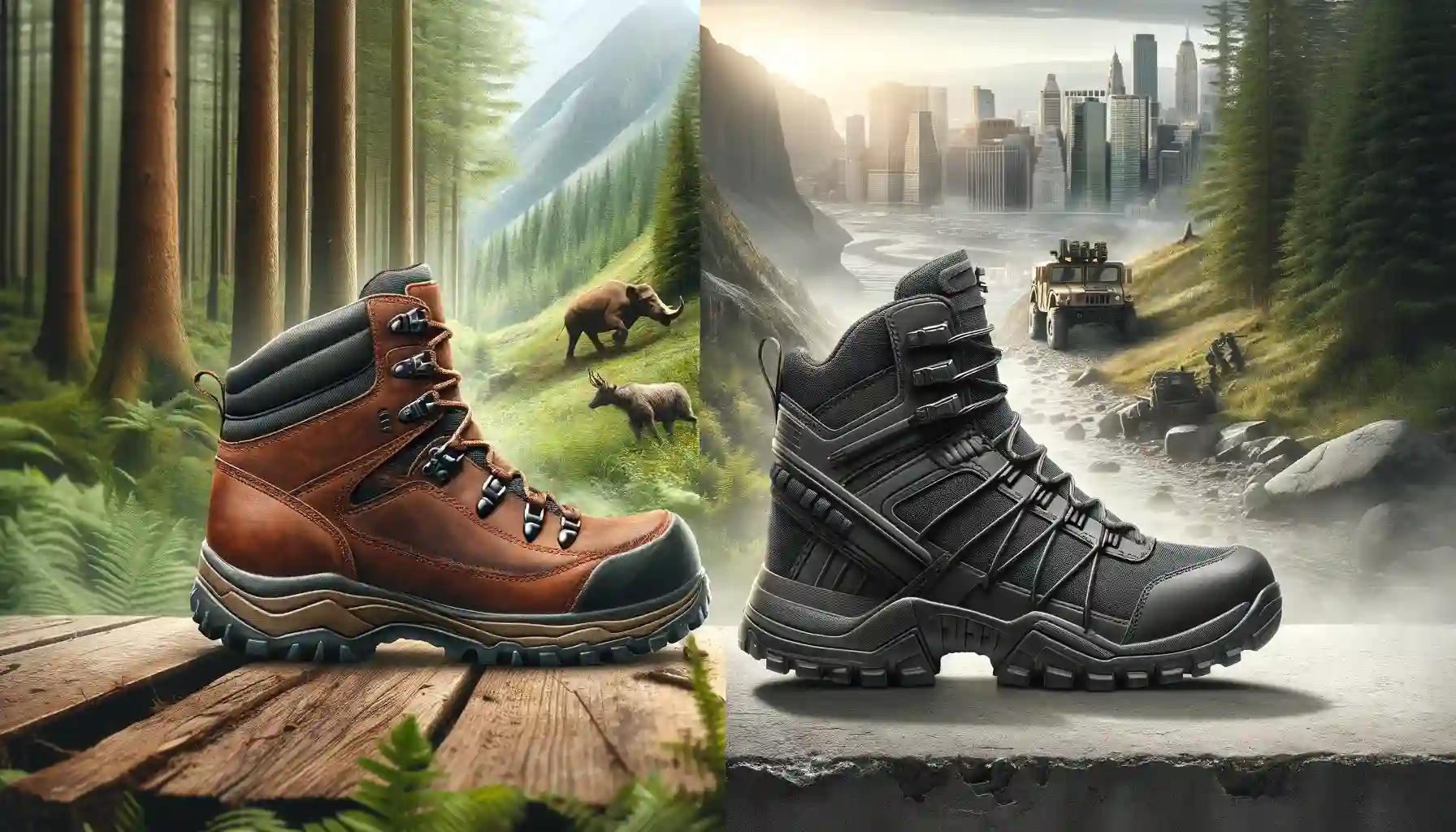
Outdoor footwear made especially to support and shield your feet on extended hikes through the wilderness is known as hiking boots. Hiking boots are made of stronger materials than conventional shoes to resist rugged terrain and offer sufficient ankle support. They frequently have sturdy uppers and thick, non-slip soles, which aid in preserving stability on rocky or muddy terrain. To ensure that hikers can survive the numerous elements encountered on trails, hiking boots are designed with endurance and comfort throughout prolonged periods of walking as their primary concerns.
Benefits of hiking boots
The capacity of hiking boots to offer outstanding support and protection against challenging terrain and weather conditions is their main benefit. They are made to keep your feet dry and toasty warm with features like sturdy construction and water-resistant materials. In addition, the grasping thick soles provide a firm grip, lowering the possibility of trips and falls on uneven or slick terrain. These boots are also constructed with extra cushioning and support to avoid injuries—especially those that could occur around the ankles, which are particularly susceptible during hiking activities. For those who want to take on difficult terrain or lengthy multi-day hikes, the appropriate hiking boots can make all the difference in the world.
When to use hiking boots
Hiking boots are ideal for various outdoor pursuits that require durability and additional protection. Slips, trips, and ankle rolls are more likely to occur on rugged and uneven terrain, which is where they are especially useful because of the increased risk of damage. Whether going on a day hike along the trails in your neighborhood or on a multi-day trip in the mountains, hiking boots will provide the required support for your experience. Furthermore, in locations or seasons when the weather might be unexpected, such as in hilly regions or during the rainy season, the water-resistant characteristics and robust construction of hiking boots are essential equipment.
Tactical Boots
What are tactical boots?
Durability and mobility are two characteristics included in tactical boots, which were initially developed by law enforcement and military personnel. The materials used to construct these boots are lightweight but still provide adequate protection and support. They are usually equipped with reinforced soles and innovative lacing systems that encourage speed and agility. This enables the wearer to move rapidly and effectively in various challenging settings. Tactical boots are also created to meet the demands of soldiers who might need to remain on their feet for extended periods. These boots include additional comfort features such as cushioned insoles and breathable fabric.
Benefits of tactical boots
Tactical boots designed specifically for military use are designed to provide a combination of flexibility, comfort, and protection. They offer superior foot support and make it easier to move around quickly, which is an essential attribute in many situations involving police enforcement and the military. Because they are constructed to survive harsh conditions and rigorous use, these boots are of the utmost importance in longevity. Additionally, tactical boots frequently integrate features such as side zippers that allow for quick removal, moisture-wicking linings that keep the soles dry, and slip-resistant outsoles that improve traction across various terrains.
When to use tactical boots
Tactical boots are adaptable and can be used for a variety of tasks besides their primary objective, which is to serve the military. Those individuals who demand footwear that is durable and protective and allows for some degree of agility and swift movement will find that these shoes are a good alternative. Because of this, they are appropriate for people who participate in outdoor games such as paintball or airsoft, for those who respond to emergencies, and even for general use in rough and uneven areas. However, because they are both long-lasting and comfortable, they are also becoming increasingly popular as a fashionable yet practical option for everyday wear.
Design and Construction
Materials used in hiking boots vs tactical boots
Both hiking and tactical boots are constructed from materials appropriate for their intended purposes. Hiking boots are often constructed from durable materials such as thick leather or synthetic materials that offer adequate protection and resistance. These materials are an excellent choice to protect against the elements in outdoor places. Tactical boots, on the other hand, may be constructed from materials that are lighter and more flexible to promote quick movements and agility. At the same time, technological advancements have made it possible for producers to incorporate materials that are not only long-lasting but also lightweight. This has enabled them to bridge the gap between hiking boots’ hardness and tactical boots’ flexibility.
Durability comparison
Durability is an essential component of both hiking boots and tactical boots, yet the construction of each type of boot takes into account distinct requirements. Most hiking boots are more durable than other types of footwear because they are constructed to resist the wear and tear that comes with hiking over long distances and tough terrain. More often than not, they are built with materials resistant to abrasion and weather and reinforced stitching. While tactical boots are also designed to be long-lasting, they are designed with flexibility and speed in mind. They are constructed from materials that can withstand rapid movements and frequent changes in direction.
Design features for functionality
Both boots have designs that incorporate unique design aspects to improve their functionality for various tasks. To give ankle stability and support, which are crucial for crossing rocky terrain, hiking boots often have a higher cut than other types of footwear. In addition, the shoes’ soles include deep lug patterns, which provide exceptional traction. On the other hand, tactical boots may have lower cuts for increased flexibility and speed, and their soles may be intended to be worn on a range of surfaces, including those seen in urban conditions. Furthermore, they may incorporate concealed pockets or compartments to transport tiny objects, a distinctive feature for tactical circumstances.
Comfort and Fit
Importance of comfort in boots
The level of comfort that a pair of shoes provides is of the utmost importance. Still, boots are of the utmost significance for certain activities, such as hiking or tactical operations. Blisters and more serious foot ailments are only two of the many problems that can be avoided by wearing a boot that fits properly. For the shoes to be able to handle the physical demands of the activities for which they are intended, it is essential that they not only fit well but also provide enough assistance and cushioning.
Fit and sizing differences.
Proper fit and sizing are essential for ensuring maximum comfort and functionality. Hiking boots are typically made to fit snugly to avoid foot movement and potential blisters or toe injuries. In addition, the accommodation should be made for thicker socks that are normally worn to keep the feet warm and provide cushioning. For tactical boots, a slightly looser fit is preferred to ensure comfort, quick removal, and improved ventilation for cooler feet during extended wear.
Special features enhancing comfort.
Hiking and tactical boot manufacturers have created different features for improved comfort. Hiking boots often have padded collars, midsoles that return energy, and footbeds that conform to your foot’s shape. Tactical boots usually include advanced cushioning, arch support, and shock-absorbing materials to provide comfort during extended standing or quick movement periods. Many modern boots in both categories now have moisture-wicking liners, essential for keeping feet dry and maintaining comfort during extended use.
Performance in Different Environments
Hiking boots in natural terrains
Hiking boots are made with a focus on optimal performance in natural terrains. The sturdy design of these shoes safeguards your feet from outdoor hazards like rocks, bushes, and uneven terrain. The outsoles feature deep lugs that provide excellent grip and prevent slips on wet or muddy terrain. The materials are durable and often waterproof, preventing wet feet in rainy conditions and essential for comfort on lengthy hikes.
Tactical troops in varied environments
Tactical boots excel in a range of settings, urban or rural. They are highly valued for their ability to handle different surfaces effortlessly. Tactical boots provide dependable performance on any surface, be it asphalt, gravel, or a forested trail. Typically, their soles are designed to offer great traction on wet and dry surfaces, making them suitable for different weather conditions. Moreover, using lightweight and breathable materials in tactical boots makes them perfect for situations requiring speed and endurance.
Waterproofing and breathability
Waterproofing is an essential aspect of all outdoor footwear. Hiking boots often have a waterproof membrane that is breathable and allows sweat to escape while keeping water out. This feature relies on keeping comfort intact during long treks in wet conditions. Tactical boots prioritize breathability to keep feet cool during intense activities or in warmer climates, and they also have waterproof options. Proper breathing is paramount for individuals who spend extended periods in these boots.
Price and Value
Cost Comparison
Hiking and tactical boots have different prices based on the brand, materials, and features. The price range for a good pair of boots in both categories is usually $100 to $300. The cost of boots can increase if they are equipped with advanced technologies or made from premium materials.
Long-term value
Investing in durable boots for hiking or tactical use often leads to long-term financial benefits. These boots are built with long-lasting materials and solid construction, so they don’t need to be replaced frequently despite frequent use. Boots designed for specific activities can prevent injuries, discomfort, and costly consequences.
Conclusion
Choosing the appropriate footwear is vital and relies on the activities you intend to participate in. Hiking boots and tactical boots serve distinct purposes and provide separate advantages. Considering factors like environment and activity level, you can choose a boot that fits and enhances your performance. Selecting the right boots is crucial for your outdoor adventures, whether you prefer hiking boots or tactical boots.
Frequently Asked Questions (FAQs)
Which boot is better for wet environments?
Both hiking and tactical boots can be equipped with waterproof technologies, but hiking boots typically offer better protection and durability in wet natural settings. They are specifically designed to handle the challenges of outdoor trails and wet conditions, ensuring that your feet stay dry and comfortable throughout your hike.
Can I use tactical boots for regular hiking?
Tactical boots can be used for regular hiking, particularly on light to moderate trails. Their lightweight design and flexibility provide good comfort and mobility, making them a viable option for casual hikers. However, for more challenging terrains or longer distances, hiking boots with their superior support and protection might be the better choice.
Are hiking boots suitable for everyday use?
Hiking boots are designed for durability and comfort, making them suitable for everyday use, especially in rural or winter settings. Many people find them beneficial for daily activities that require a lot of standing or walking. Their robust construction and protective features also make them a practical choice for various outdoor jobs.
How long do these boots typically last?
The lifespan of hiking and tactical boots can vary based on the frequency of use, the care they are given, and the harshness of the environments they are used in. With proper maintenance, most high-quality boots can last several years, even under frequent use. It’s important to follow the manufacturer’s care instructions to maximize the life of your boots.
What are the top brands for hiking and tactical boots?
There are several reputable brands that offer high-quality hiking and tactical boots. For hiking boots, brands like Merrell, Salomon, and Keen are well-known for their durability and advanced designs. For tactical boots, 5.11 Tactical, Bates, and Under Armour are popular choices among professionals for their performance and reliability.