Outdoor enthusiasts need hiking boots for comfort and support on rugged trails. Despite this, frequent use can lead to dirt buildup and odors, negatively impacting their performance and longevity. This guide provides a breakdown of the best methods for cleaning hiking boots to ensure you have a pair in great shape for your next adventure.
Keeping your hiking boots clean and smelling fresh is critical. Cleaning them with mild soap or specialized boot cleaner can help remove dirt and grime, while applying a conditioner can help restore the leather and prevent cracking. Lastly, you should always thoroughly dry your boots after cleaning them. Regularly inspect your shoes for wear and damage. Repair or replace them as soon as possible if you notice any. Finally, storing your shoes in a cool, dry place when you are not wearing them is also essential.
In This Post
Material Needed
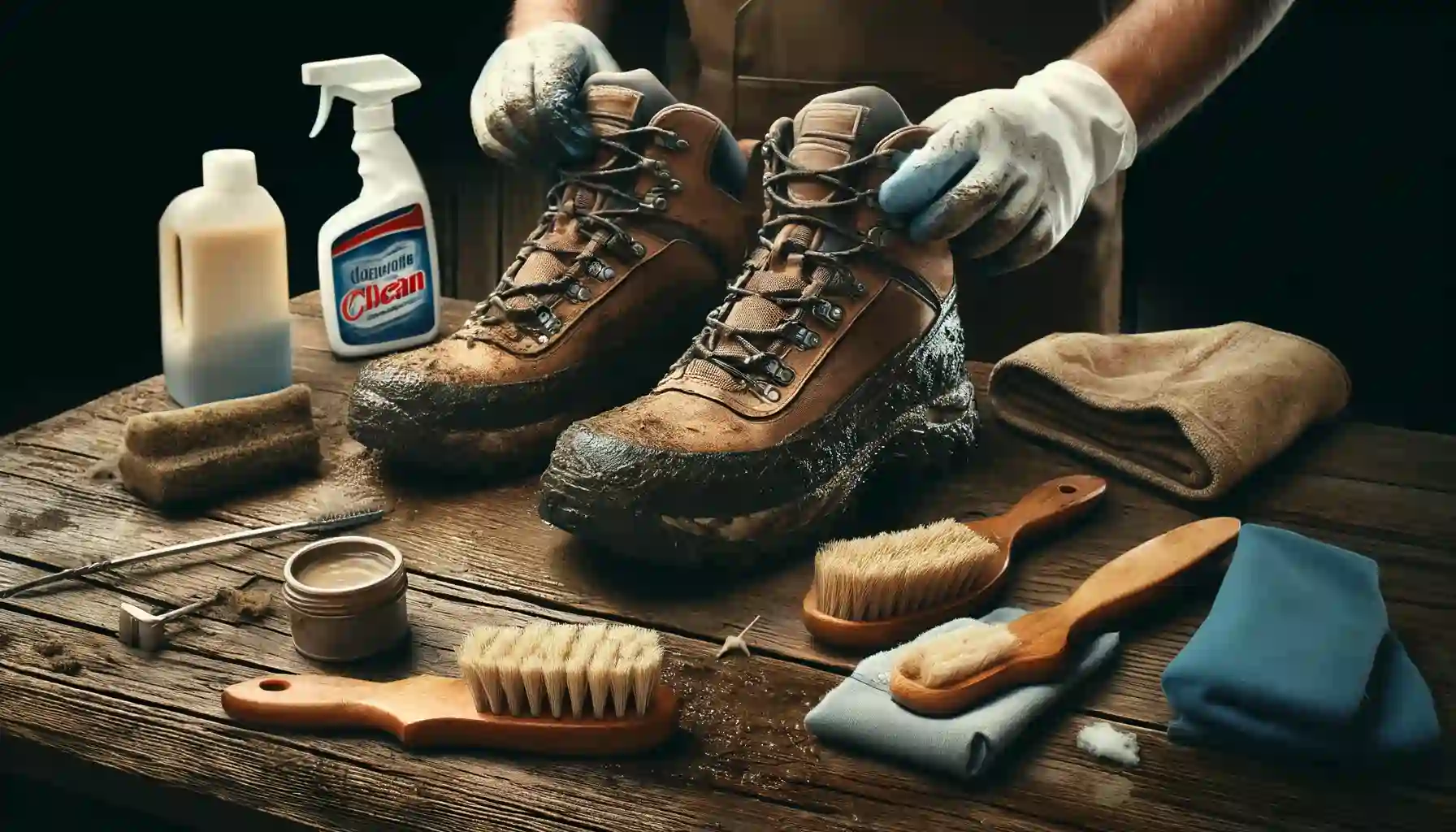
Supplies are needed before you begin cleaning. You will need a soft brush, preferably one that is mild.
You will need detergent, lukewarm water, cleaning cloths or sponges, waterproofing spray, an old toothbrush, and eco-friendly cleaning solutions. You must have these items on hand to ensure a thorough cleaning process. The key to keeping your items in good condition is to perform regular maintenance on them. Use a soft cloth to buff out scratches, and apply waterproofing spray regularly. Finally, ensure all items to be stored are cleaned with a mild detergent and dried thoroughly before they are stored.
Pre-Cleaning Steps
- Removing Laces and Insoles
- How to Clean Laces
- How to Clean Insoles
Start by taking off the laces and insoles from your hiking boots and removing them. Better access to the interior will allow a cleaner to do a better job of cleaning, thus ensuring a more effective cleaning procedure. It would help to hand wash the laces separately using mild detergent and lukewarm water before drying them. Wash the insoles carefully with a soft brush and mild detergent solution before rinsing. Ensure the laces and insoles are completely dry before reinstalling them in your boots. The boots should be carefully checked for other dirt and grime, and the cleaning process should be repeated.
Cleaning the Exterior of Hiking Boots
Remove any visible dirt and debris from the exterior of your hiking boots. The best way to remove dirt from the surface is to gently brush it off with a soft brush, being careful not to scratch it. Use appropriate cleaning methods and solutions according to the boots’ material if you have leather, suede, or synthetic boots. When cleaning leather boots, use a mild detergent solution and a soft cloth to wipe away stains using a mild detergent solution.
If you are cleaning suede or nubuck boots, use a suede brush to remove dirt and stains from the shoes gently. Alternatively, you can easily clean synthetic boots using a soft brush or cloth and a mild detergent solution. Let the boots dry naturally, away from direct heat. For best results, apply a protective conditioner or wax after drying.
Cleaning the Interior of Hiking Boots
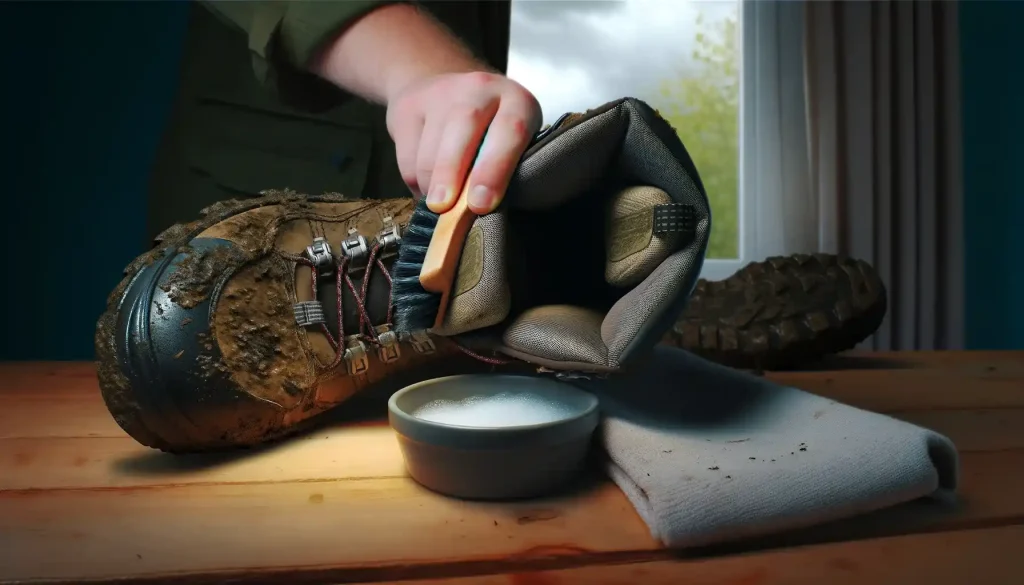
It’s essential to clean the inside of your hiking boots after washing the exterior. Deodorize the inside using baking soda or a commercial deodorizing product. Sprinkle baking soda inside the shoes and let them sit overnight before shaking them out. Use a mild detergent solution and a soft brush or cloth to clean the interior. The shoes should be allowed to dry completely before they are worn.
To prevent future dirt and water intrusion, you can use an antibacterial spray or spray-on waterproofing product to protect the inside of the seat from future dirt and water intrusion. You can use a suede or soft brush to gently remove any dirt or grime inside the boots once they have dried completely. You can also use a suede conditioner to restore the shine and protect the suede by preserving its quality.
Drying Your Hiking Boots
Proper drying is crucial to prevent damage to your hiking boots. Direct heat sources such as heaters or direct sunlight can cause the materials to crack or shrink. Instead, let your shoes air dry at room temperature, stowing them on the newspaper to absorb moisture and keep them in shape longer. Consider using a boot dryer made significantly to speed up the drying process.
Drying your boots in the dryer is never a good idea as this can damage them. You should also avoid leaving them near an open flame or putting them near any source of heat in your home. If you want to dry your boots, ensure they are not directly exposed to the air when drying. They should be turned upside down to ventilate the area where they are being appropriately hung. Make sure that they are drying evenly regularly by checking them regularly.
Maintaining and Waterproofing Your Hiking Boots
Apply waterproofing treatments regularly to keep your hiking boots waterproof. The waterproofing product you choose should match the material of your shoes. Follow instructions carefully. Additionally, routine maintenance checks should be performed to look for any signs of wear or damage and address them immediately to prevent further deterioration.
Eco-Friendly Cleaning Tips
Several eco-friendly cleaning solutions and methods are available for hikers. Use natural, biodegradable cleaning products. You can also make DIY cleaning solutions with vinegar and baking soda. In addition to being practical, these alternatives also have the potential to reduce your carbon footprint. There is no doubt that even biodegradable products can still hurt the environment.
For this reason, it is ultimately essential to use these products responsibly, even if they are biodegradable. When cleaning your gear, you must also be conscious of your water sources, as certain chemicals may harm the environment if misused.
Common Mistakes to Avoid
Keeping hiking boots clean requires avoiding common mistakes. Harsh chemicals or abrasive brushes can weaken the materials and strip protective coatings away. The best way to care for hiking boots is to prevent machine washing or drying them, as this can cause them to lose their shape and structural integrity. It is recommended that you wash your boots gently by hand and then air dry them to ensure their longevity.
It would help if you allowed the shoes to air dry completely before wearing them after they have been washed. Speeding up the drying process by using a shoe dryer is possible. Additionally, it is recommended that after cleaning the boots, you apply a waterproofing product to them to help keep them in good condition for a more extended period.
Conclusion
The following cleaning guidelines will ensure your hiking boots remain in top condition for many future adventures. Proper care and maintenance extend the lifespan of your shoes and enhance their performance. So, before you go on your next outdoor excursion, please give your hiking boots the proper care they deserve.
It will be great for your feet! Regularly cleaning your boots can also prevent dirt and grime from sticking to them, thus reducing the possibility of your shoes being damaged by dirt and grime. Regular conditioning is also essential to keeping your shoes soft and pliable. Please keep them in a cool, dry place to prevent damage.
Frequently Asked Questions (FAQs)
Can I put my hiking boots in the washing machine?
No, you should not put hiking boots in the washing machine. Washing machines can damage the materials and structure of hiking boots. Instead, clean them manually using a brush, mild soap, and water to maintain their condition and longevity.
How often should you clean hiking boots?
Yes, you should clean hiking boots regularly, ideally after every hike. Cleaning them frequently prevents dirt and debris buildup, which can degrade the materials and shorten the boots’ lifespan. Regular maintenance also ensures optimal performance and comfort during hikes.
How long to let the boots dry after cleaning?
Allow boots to dry for at least 24 hours after cleaning. Boots need ample time to air dry thoroughly to prevent moisture from damaging the material and affecting the boot’s shape and comfort. Always dry boots in a well-ventilated area away from direct heat sources.
How long do hiking boots last?
Hiking boots typically last between 500 to 1000 miles. The lifespan depends on the boot quality, terrain, and maintenance. Proper care, such as regular cleaning and conditioning, can significantly extend their durability. Monitoring the sole and upper wear is crucial to determine when replacement is necessary.