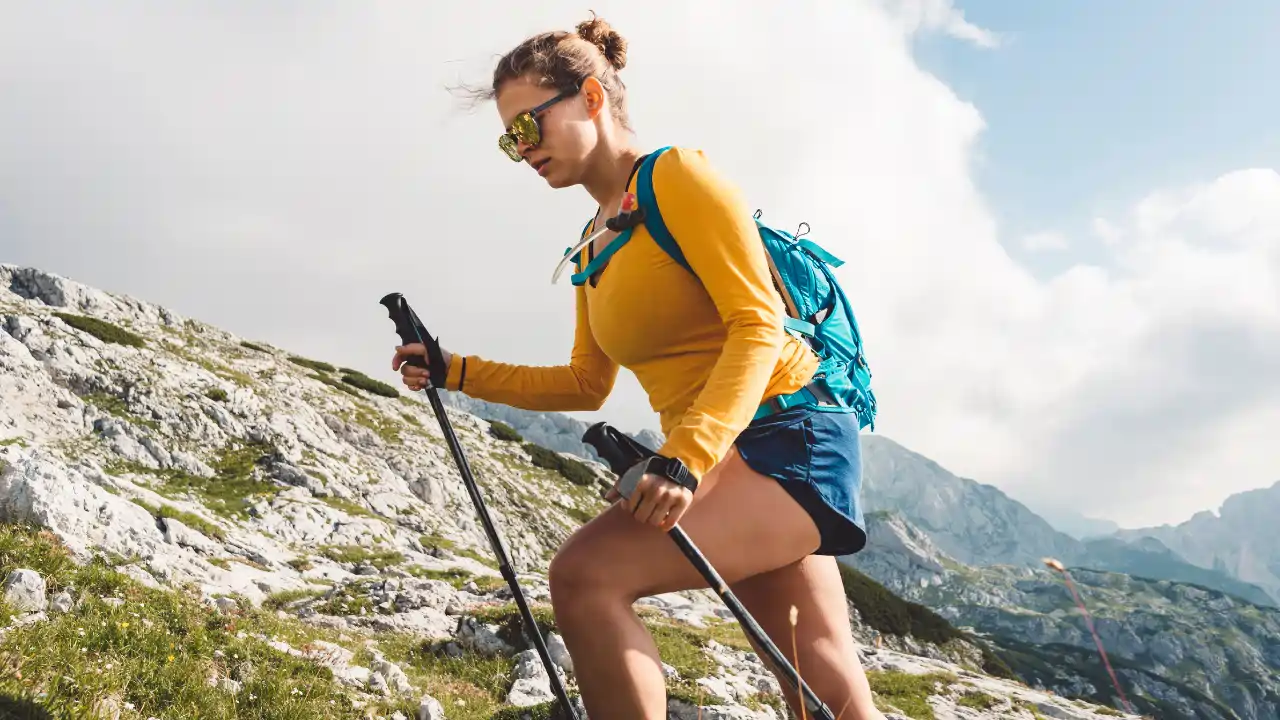
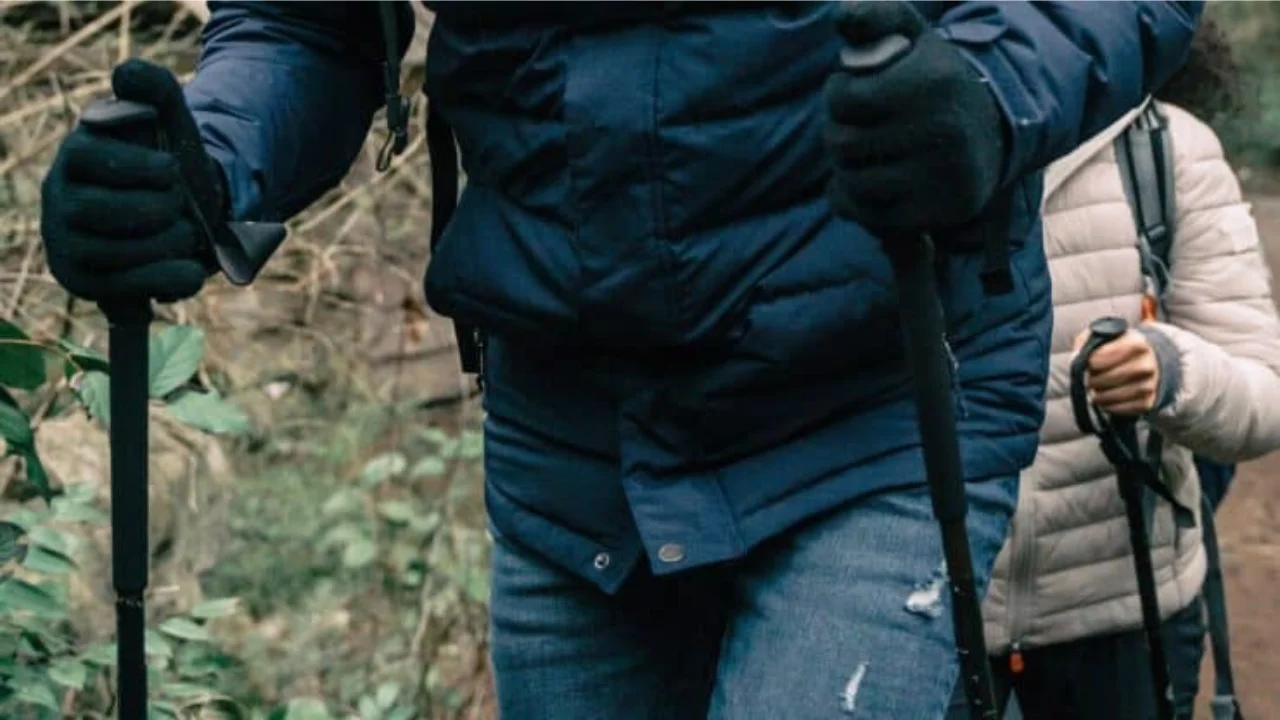
Trekking poles: those seemingly simple sticks seasoned hikers swear by and beginners tend to ignore, even though they’re necessary. What are the pros and cons of these products? Are they worth the money? You have likely pondered this question as you stood at the trailhead pondering this question, and you are in the right place. Find out if you need trekking poles for your next adventure by diving into the world of trekking poles and finding out if they suit you. Let’s tell you a little secret: these two may become your new best friends on the trail. In this article, we will go over everything from the basics of trekking poles to their many benefits and how to choose the right pair for your hiking needs. What are you waiting for? Let’s go exploring. Here we go. Let’s get this party started.
In This Post
What Are Trekking Poles?
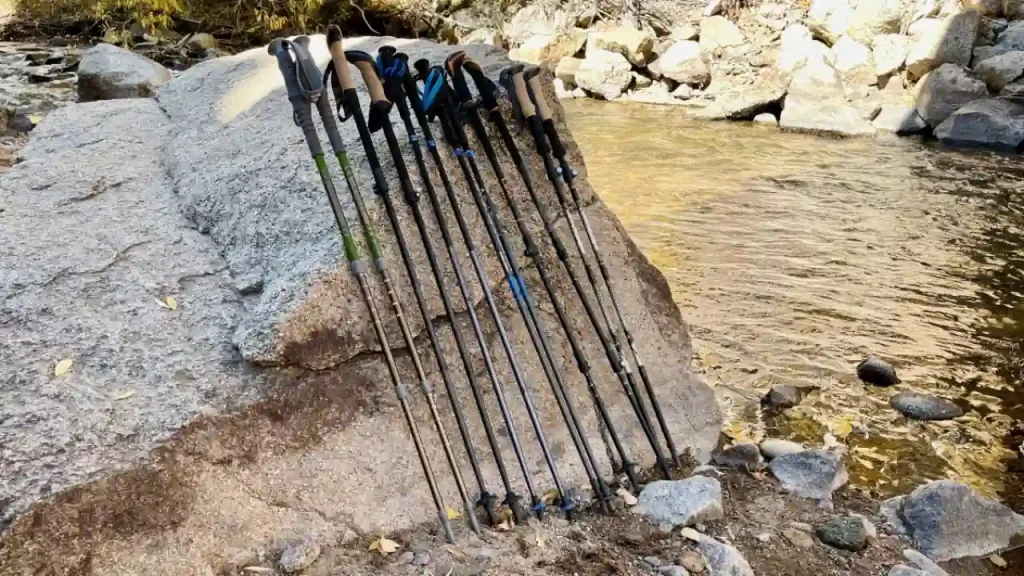
A trekking pole is a type of walking stick that is specially designed to improve stability and support during hiking or walking. Think of them as an extension of your arms, helping you maintain your balance and reducing the strain on your joints as you use them. There has been a long way since ancient travelers used simple wooden staffs to guide them on their journeys.
A modern trekking pole is typically made of lightweight materials like aluminum or carbon fiber, and is packed with features such as adjustable lengths, ergonomic grips, and interchangeable tips so that it can be used on different terrains. A number of different types of poles can be used, including telescoping poles that can be adjusted to fit a variety of heights, as well as folding poles that are compact and easy to carry around.
Types of Trekking Poles:
- Telescoping Poles: These have adjustable lengths, making them versatile for different terrains and user heights.
- Folding Poles: These are highly compact, easy to pack, and great for travel.
- Fixed-Length Poles: These are lighter and simpler but lack adjustability.
As you hike, you may find that trekking poles can make a big difference in your hiking experience, providing extra support, stability, and even improving your posture as you hike. A pair of trekking poles can be an invaluable addition to any hiker’s hiking gear, whether you are tackling steep ascents, navigating tricky descents, or just strolling along a flat trail.
Benefits of Trekking Poles
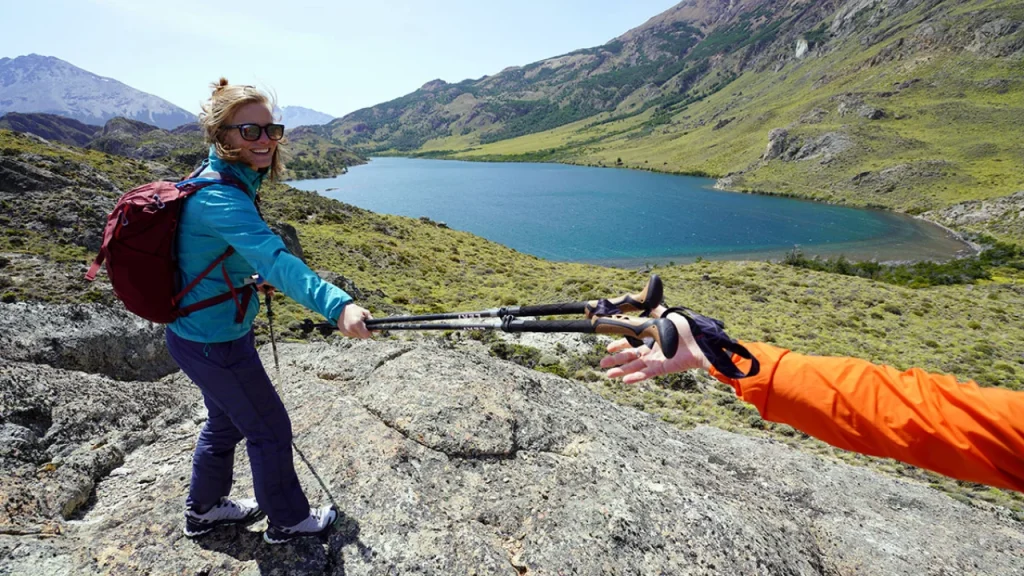
You can enhance your hiking experience by using trekking poles because they offer a multitude of benefits. In this article, we will take a closer look at why you should consider using these simple tools:
Improved Stability: If you are walking on uneven terrain, trekking poles provide you with better balance, making it easier to navigate obstacles such as rocks, roots, and other obstacles. They also give you more stability and reduce the likelihood of slips and falls as they provide additional points of contact with the ground.
Reduced Impact on Joints: One significant advantage of using trekking poles is the reduction in stress on your knees and hips. It is important to note that poles assist you in absorbing shock, especially during descents that are hard on your joints because some of the impact is distributed to your arms.
Increased Endurance: Using trekking poles allows you to distribute the physical effort across your entire body rather than just your legs. This distribution allows you to reduce fatigue and hike longer distances without feeling as exhausted as you would otherwise.
Enhanced Balance: On tricky trails and during water crossings, maintaining balance can be challenging. With trekking poles, you will be able to maintain your balance in these situations more easily, as they will provide you with additional support and stability.
Upper Body Workout: Trekking poles engage your upper body muscles, including your arms, shoulders, and back. This added workout can help improve your overall fitness and strength, turning a hike into a more complete body exercise.
It is important to include trekking poles in your hiking routine to make your hiking adventures safer, more comfortable, and more enjoyable. There are a variety of trekking poles to meet all your needs, from tackling rough terrain to reducing joint strain to getting a full-body workout.
How to Choose the Right Trekking Poles

Choosing the right material for your trekking poles is crucial, since it will have a direct impact on their durability, weight, and cost. The following are two of the most common materials that are used in trekking poles:
Aluminum:
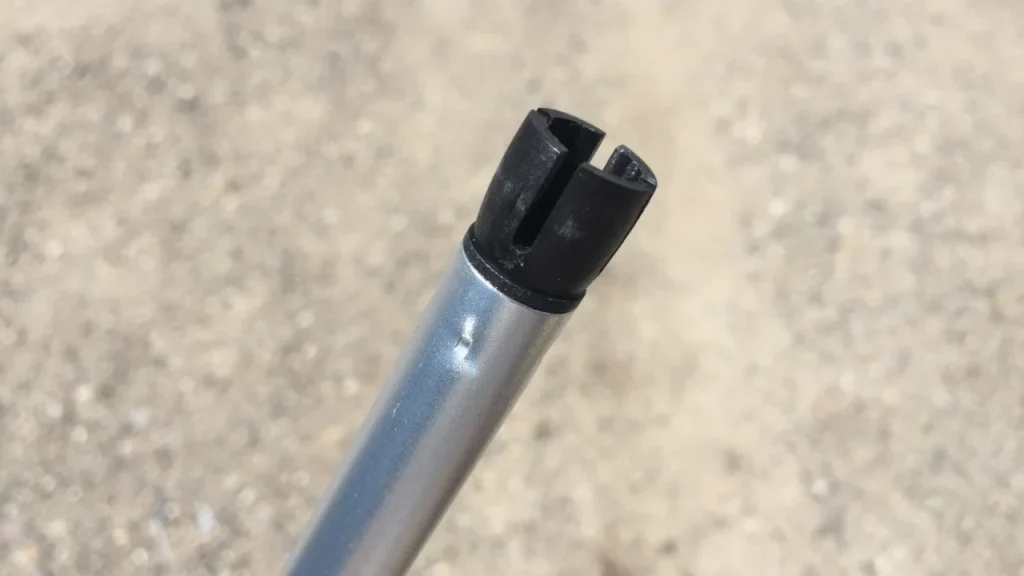
- In addition to their strong durability, aluminum poles are also known for their ability to withstand a wide range of weather conditions. The fact that they can handle a lot of wear and tear makes them an excellent choice for hiking trails that are rugged.
- Affordability: Aluminum trekking poles are generally more affordable than their steel counterparts, making them a great choice for a wide range of hikers. In terms of performance and cost, they offer a good balance between the two.
Carbon Fiber:
- There is no doubt that carbon fiber poles are significantly lighter than aluminum ones, which is a huge advantage when it comes to hiking long distances, especially during the summer when every ounce counts. In addition to minimizing fatigue, this reduced weight also makes it easier to carry them around.
- In spite of the fact that carbon fiber poles are lightweight, they are incredibly strong and can offer excellent support and stability. In contrast to aluminum, they may be more susceptible to snapping under extreme stress when compared to steel.
- There is a higher price tag for carbon fiber poles because of the advanced material and manufacturing process. There is a price tag associated with them, but for those who are looking for high performance and minimal weight, they can be worth the extra investment.
Considering your hiking needs and your budget will help you make the best choice when choosing aluminum or carbon fiber poles. Aluminum poles are an excellent choice for hikers looking for a lightweight, high-performance solution, while carbon fiber poles are ideal for those looking for a durable and cost-effective option.
Grip:
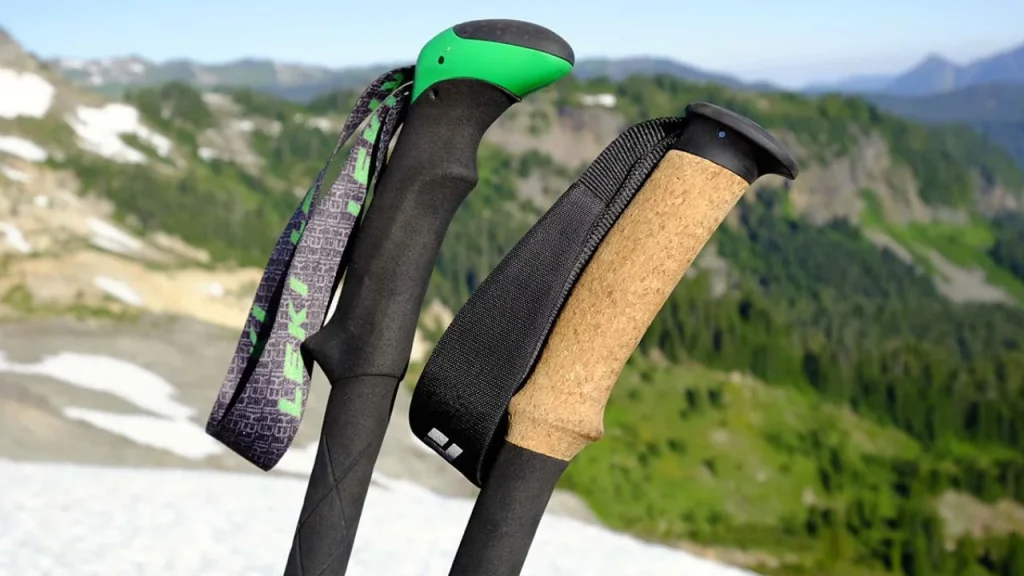
Another important factor to consider when purchasing trekking poles is their grip, since it will determine their comfort and usability as well as their durability. In order to help you choose the right grip for your hands, here are the most common types:
Cork:
- Personalized comfort: Cork grips may have a unique texture, but they are custom-molded to match the shape of your hands over time.
- A natural moisture wicker, cork is adapted to prevent your hands from getting wet and causing you to slip, even as you sweat while hiking, because of its ability to absorb moisture.
Foam:
- In general, foam grips are soft, making them comfortable to hold, especially when you are taking a long hike.
- As an insulator, foam keeps your hands warm in cold conditions, providing a pleasant grip in a wide variety of weather conditions, and it also keeps your hands warm in cold conditions.
Rubber:
- The rubber grips are very durable and can withstand rough usage, tough conditions, and repeated use without wearing out in a short period of time.
- The rubber provides excellent grip and control in wet and muddy conditions, especially because of its non-slip properties, so you are more likely to stay on your feet.
Choosing the right grip depends on your personal preferences as well as the conditions in which you are likely to encounter. Cork grips are great for comfort and moisture management, foam grips are soft and insulating, and rubber grips offer durability and a non-slip hold.
Adjustability:
It is also important to take into consideration the adjustability of the trekking poles when you are choosing them. As a result of this feature, you will be able to enhance the quality of your hiking experience by providing flexibility and convenience. The following are some of the most common types of adjustable poles, along with some other factors to consider:
Telescoping Poles:
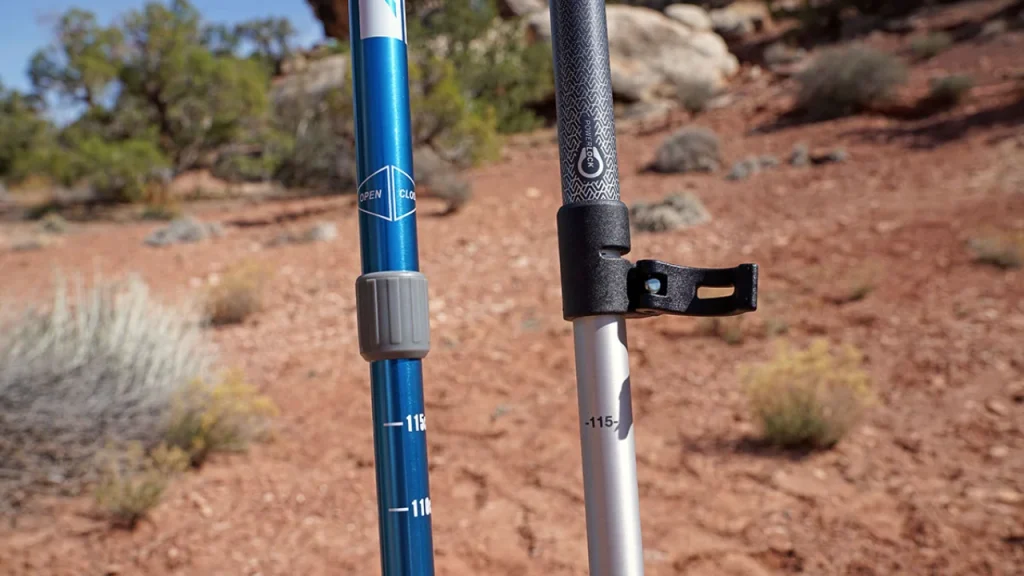
- Versatile: Telescoping poles can be adjusted to different lengths, making them suitable for various hikers and terrains. Depending on your hiking style, you can shorten them to suit uphill climbs, while lengthening them to suit downhill descents, providing optimal support and comfort throughout your journey.
- Easy to Adjust: These poles typically have a simple locking mechanism, allowing you to adjust the length quickly and easily.
Folding Poles:
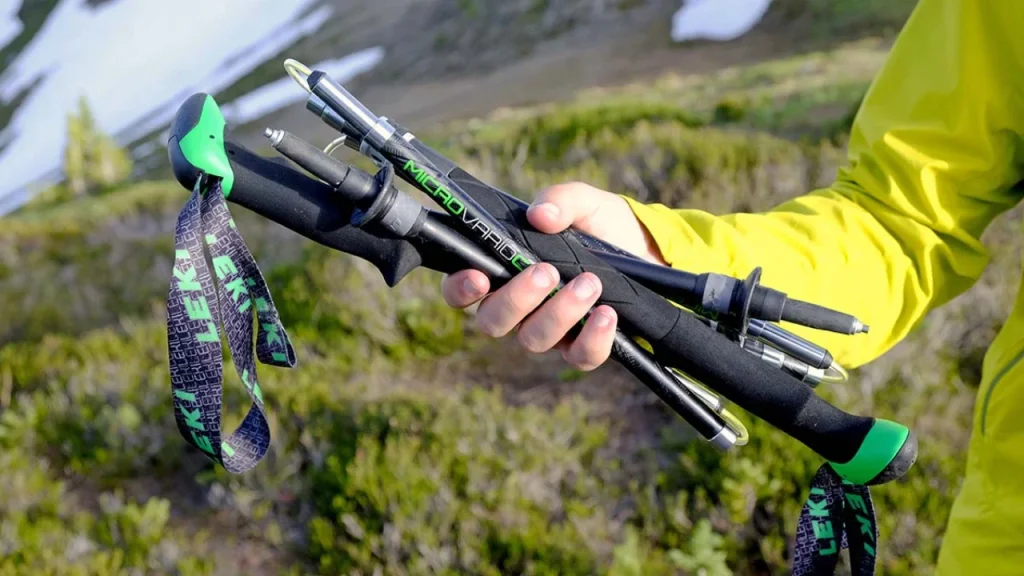
- Compact Storage: Folding poles are designed to collapse into a small, compact size, making them easy to store and transport. In addition to this, hikers who need to pack their poles into a backpack or carry them when they are not in use will particularly benefit from this feature.
- Quick Setup: Despite their compact size, folding poles can be quickly and easily set up, providing convenience on the trail.
Weight:
- Consider the Weight: The weight of your trekking poles is crucial, especially for long hikes. The lighter the pole, the less fatigue you will feel and the easier it will be to carry them over an extended period. Lighter materials, however, such as carbon fiber, can be more expensive than heavier materials, such as steel.
Cost:
- Balance Your Budget: When choosing trekking poles, it’s essential to balance your budget with the features you need. As you might expect, higher-end poles with advanced materials and features will cost more than lower-end poles, but they will probably offer better performance and durability. Choose a pair of poles that fits within your budget and consider which features are most important for your hiking style before purchasing a pair.
If you consider the adjustability, weight, and cost of trekking poles, then you can find the perfect pair to enhance your hiking experience, and provide the right balance of support, convenience, and affordability which will enhance your hiking experience.
User Experiences
It’s no secret that hiking poles have a lot of benefits, with hikers sharing stories about how trekking poles have improved their hiking experience in the past. Jane, who is an avid hiker, was discussing how poles helped her conquer the Appalachian Trail by reducing the pain in her knees and providing her with stability as she walked on rocky trails. Similarly, Mark, who enjoys weekend hikes in the mountains throughout the year, appreciates the extra support they provide during steep ascents and descents, thus making his hikes safer and more enjoyable. As a result of these personal accounts, you are able to learn how trekking poles can enhance comfort, stability, and endurance for hikers of all levels, demonstrating how they can enhance comfort, stability, and endurance for hikers of all levels.
Expert Opinions
The use of trekking poles is highly recommended by both seasoned hikers and physiotherapists alike. As a seasoned mountaineer, John advises, “Trekking poles are a game-changer, especially on uneven terrain.” A physiotherapist named Dr. Smith adds, “They provide additional stability and support to hikers, which can significantly reduce their risk of injury.” As a result of these expert endorsements, hiking poles are a wise investment for hikers seeking improved stability and lower injury risk on the trail, because they enhance safety and performance on the trail.
Trekking Poles for Different Activities
In a variety of outdoor activities, trekking poles provide essential support and stability to the user, providing the support and stability required in a variety of scenarios:
- Hiking poles are ideal companions for all types of hiking trails, providing enhanced balance and reducing strain on joints, particularly during ascents and descents, which can be a bit of a challenge without them.
- Whether you are backpacking or hiking, trekking poles are essential for distributing weight evenly and reducing the strain on both your back and legs if you are carrying heavy loads over long distances.
- There are a number of reasons why trekking poles are not as common in trail running as they are in hiking, but they can provide extra stability on technical trails, helping to maintain balance and propel the runner forward.
- During snowy conditions, trekking poles assist you in navigating uneven terrain and deep snow, giving you stability and reducing your risk of slipping when you are snowshoeing or skiing.
- As well as providing a full body workout, Nordic walking offers a number of health benefits, including improved posture and an increased heart rate. Trekking poles serve as useful tools for Nordic walking since they engage both the lower and upper body.
As these activities demonstrate, trekking poles can be used for a wide range of activities beyond hiking, making them valuable companions for a wide range of outdoor pursuits, as well as a great way to demonstrate their versatility and benefits.
Conclusion
The use of trekking poles can significantly enhance your hiking experience, improving your stability, reducing joint impact, and increasing your endurance as well as improving your overall hiking experience. No matter where you are on your journey, these tools provide invaluable support whether you are tackling rugged terrain or a leisurely trail. Trekking poles help you navigate challenging landscapes with more confidence as they distribute weight and provide extra balance to assist you in navigating them. There are some particular benefits to using them on steep ascents and descents, where they can lessen the strain on knees, as well as improve the overall comfort of the ride. Would you like to elevate your hiking adventures to a whole new level? Invest in a pair of trekking poles and you will be able to enjoy the added stability and comfort they will bring to any outdoor adventure you embark upon.
FAQ
Do you think trekking poles are necessary for all hikes?
There is no need to carry trekking poles on all hikes, but they can greatly enhance stability, reduce stress on joints, and improve endurance when tackling challenging terrain.
What are the benefits of trekking poles if you have knee pain?
Yes, trekking poles can help reduce knee pain by distributing weight more evenly and providing additional support on descents, which is why they are so popular.
When it comes to maintaining my trekking poles, what should I do?
Cleaning your trekking poles on a regular basis with mild soap and water is the best way to remove dirt and debris from them. Make sure that the tips and grips of the device are free of any signs of wear or damage. In order to prevent corrosion, it is recommended that you store them in a dry place.
Is there a specific pole that can be used for winter hiking?
Yes, there are some trekking poles that come with snow baskets or larger tips designed to aid in traction in snowy conditions. With the help of these features, you will be able to navigate icy or deep snow more easily.
When it comes to storing trekking poles, what is the best way to do it?
To ensure your trekking poles remain in good condition for your next adventure, store them collapsed and clean in a cool, dry place to avoid damage and ensure they remain in good condition for your next hike.